
LAMULA — vendor-independent weather radar chain
The full processing chain of a commercial weather radar, rebuilt from the FPGA digital receiver to the WebGL product viewer.
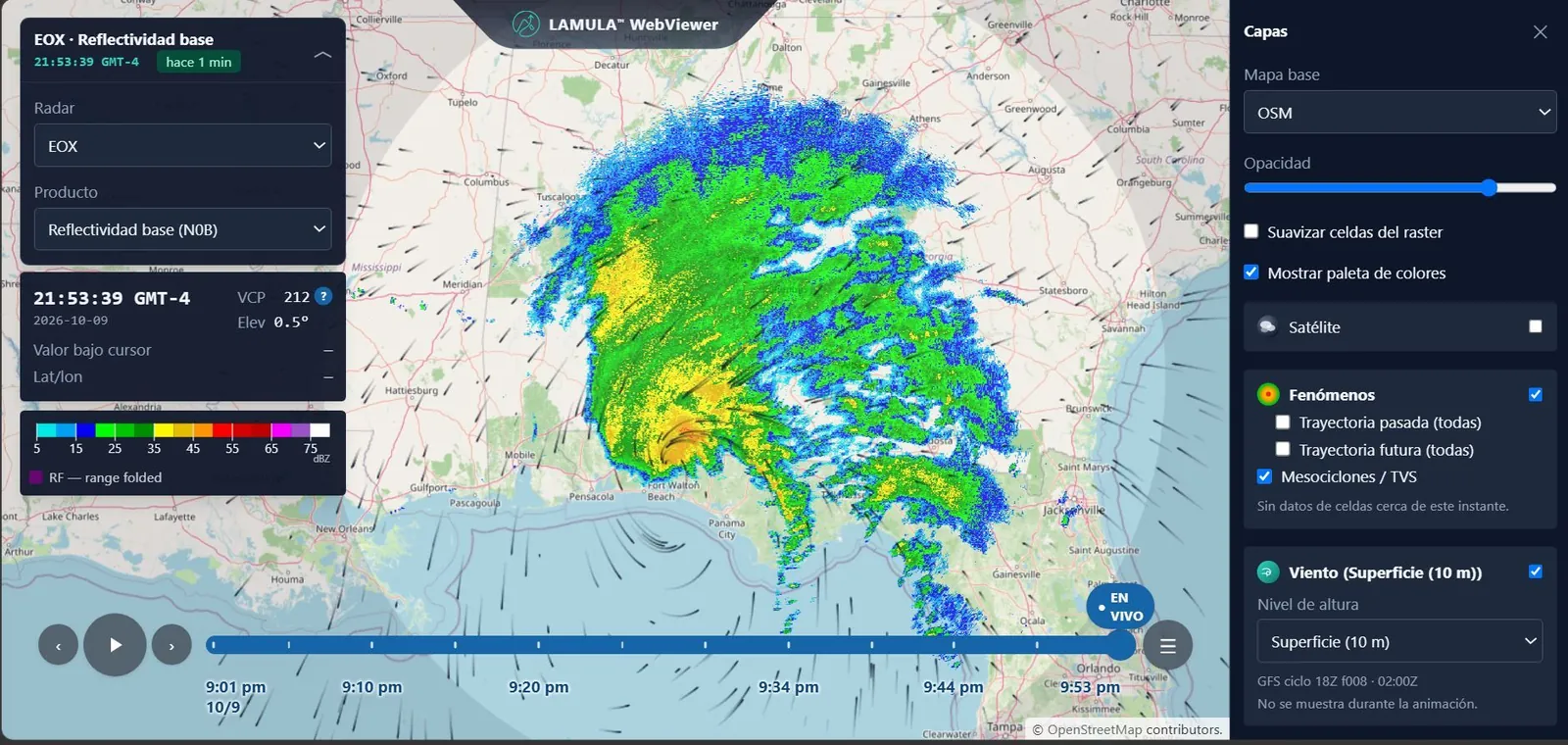
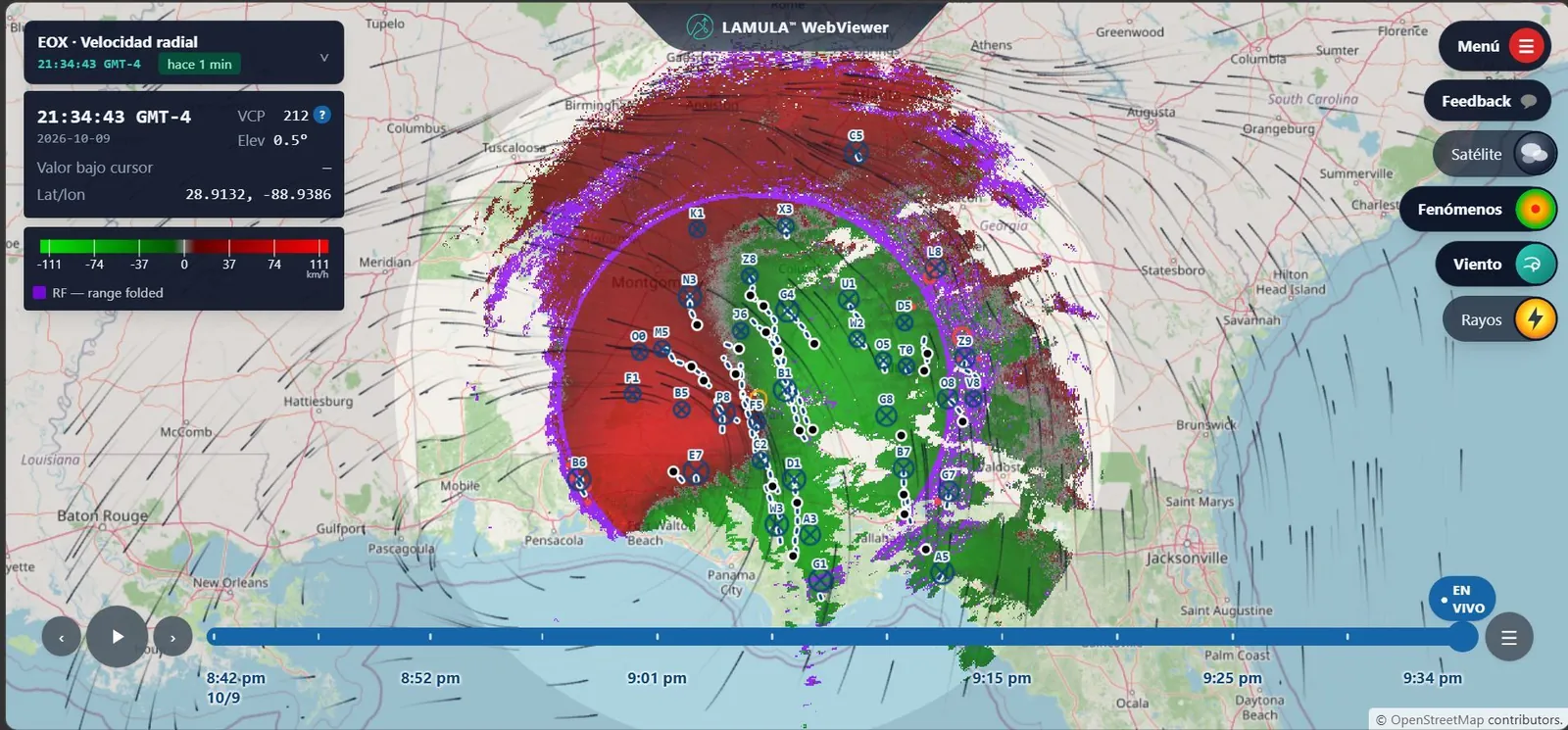
The problem. A weather radar whose control and processing software is a closed vendor suite is a radar you cannot maintain, extend or repair on your own terms. Spare parts and licences become a single point of failure for a national observation asset.
The constraint that is not negotiable. The meteorological data must stay standard. Rebuilding the chain is worthless if the output stops being readable by the tools and archives the field already uses.
The decision. Emulate the interface instead of licensing it. The control processor archives volume observations as NEXRAD Level-II and presents itself to ORPG as a WSR-88D RDA by implementing ICD 2620002 in full. The standard becomes the seam: everything behind it is ours, everything in front of it is unchanged.
Where it stands. Open source, and today a proof of concept — not a system in operation. It descends from Vesta, the processing suite the team built at the Cuban meteorological service, which has run that network since 2014, a Gematronik radar among them. Parts of this chain start from Vesta code that was not all mine, and finishing it needs the whole team, not just me.
What the design bought. A hardware abstraction layer with two interchangeable adapters — the real plant over Modbus TCP / Profibus, and a faithful simulator — so control logic is developed and tested without occupying the radar. Hard real-time stays in the FPGA and DSP; the orchestration layer is soft real-time Python and does not pretend otherwise.
- FPGA / Xilinx
- C
- Python
- Vue 3
- Nuxt 3
- OpenLayers WebGL
- Modbus TCP
- Profibus
- Docker Swarm
- PostgreSQL